Press Release
February 4, 2026
8 Design Districts that Make This Moment Matter
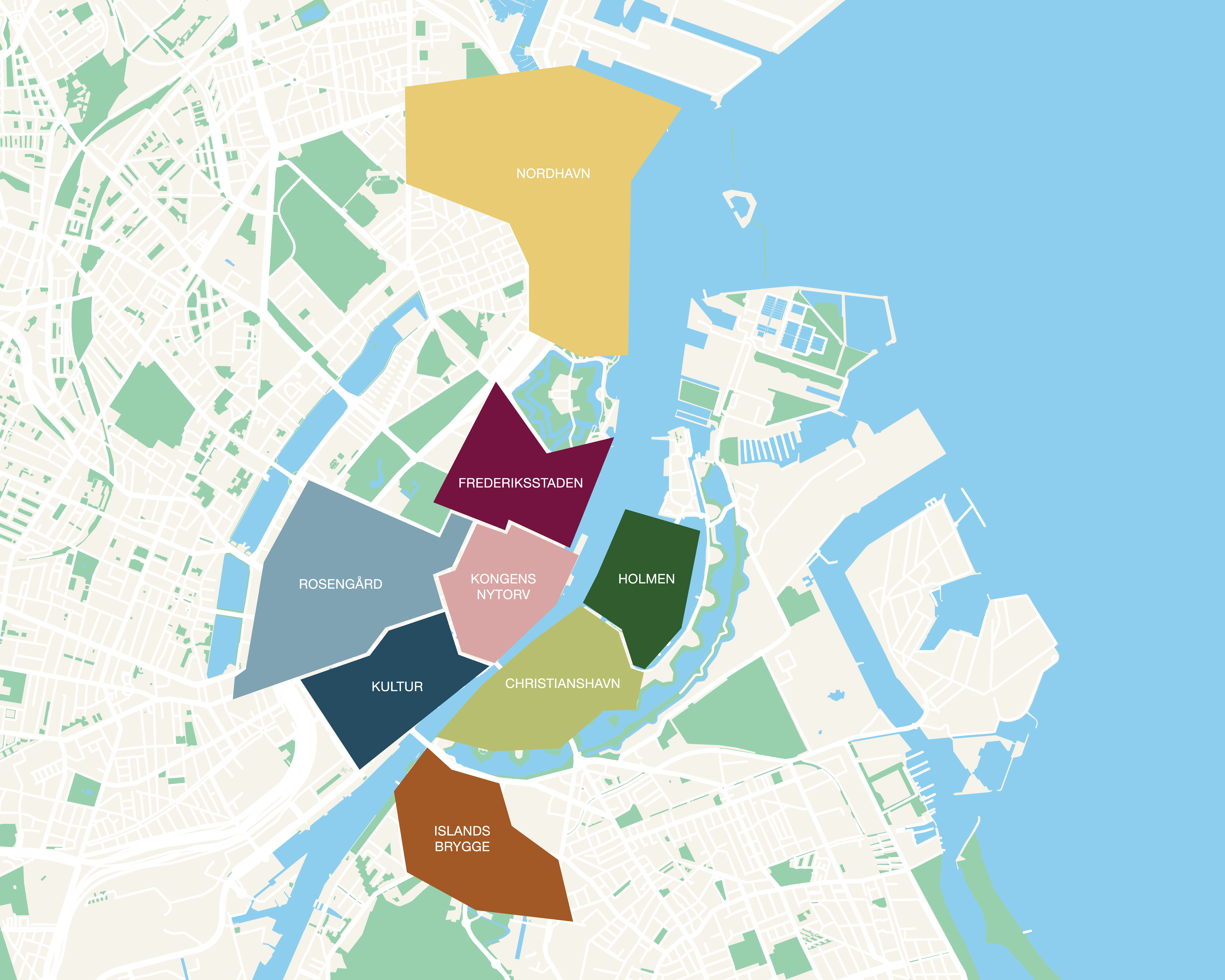
As we prepare to welcome you to a new edition of 3daysofdesign in June, Copenhagen once again sets the stage for a global celebration of design. With its distinctive balance of natural beauty, iconic architecture and award–wining urban design, the city offers an inspiring backdrop for meaningful encounters, ideas, and experiences unfolding across 8 curated Design Districts throughout Copenhagen. All in a respectful spirit.
Rooted in our 2026 theme 'Make This Moment Matter', our 8 Design Districts invite visitors to experience design as something intentional, and deeply connected to the way we live. The theme encourages both reflection and action, highlighting design that reflects the present moment with clarity, care, and purpose. While bearing in mind the positive ripple effect on each other, our communities and the planet.
Each year, 3daysofdesign reimagines your experience of Copenhagen during the festival. In 2026, our Design Districts play a central role in shaping a coherent and inspiring journey, transforming Denmark’s capital into an open exhibition space, where past, present, and future intersect. Each district brings together exhibitions, installations, events, and showrooms within a designated area, allowing guests to explore at their own pace, while discovering the unique history and cultural personality of each district.
“Copenhagen boasts a proud design legacy that encourages design to be experienced on every street corner. Because as we see it, design truly comes alive in the here and now. With this year’s 8 Design Districts, we invite visitors to be present, slow down, navigate the city with intention, and experience design where it belongs: in real places, among people, and within communities. 'Make This Moment Matter' is about creating meaning through connection between concepts, creators, spaces and places. The Design Districts are our way of turning Copenhagen into a shared stage, where each moment, meeting, and discovery matters.”
— Signe Byrdal Terenziani, CEO & Managing Director of 3daysofdesign
i—Points: continuing the conversation
Following their successful introduction last year, 6 new i—Points return in 2026 as an integral part of our festival experience. Located within the Design Districts, the i—Points serve as welcoming hubs for information, inspiration, and installations, providing a clear starting point for exploring exhibitions and events.
The i—Points also function as physical meeting places where visitors can pause, connect, and plan their next moment. Here, guests will be welcomed by dedicated District Managers and Design Ambassadors, on hand to guide, support, and enhance your festival experience. The i—Points act as gathering points for Design Walks, as well as other curated experiences throughout the city during 3daysofdesign.
With Copenhagen as the stage, our Design Districts and i—Points create a cohesive framework ensuring that every visit, meeting, and discovery feels intentional, connected, and memorable.
We look forward to welcoming you to our upcoming edition of 3daysofdesign this summer. Where we invite you, as part of our international design community, to experience inspiring ideas, engage with each other, explore Copenhagen, and Make This Moment Matter.
Design Districts 2026
Islands Brygge
In the late 19th century, Islands Brygge was developed as part of Copenhagen’s expanding harbour and industrial infrastructure. Built on reclaimed land south of the city centre, the area was shaped by shipping, storage, and manufacturing. Warehouses, factories, and port facilities once dominated the waterfront, making Islands Brygge a working district closely tied to trade and production. Throughout the 20th century, the area retained its industrial character, separated from residential Copenhagen by both function and infrastructure. As port activity gradually moved elsewhere, Islands Brygge entered a period of transition. From the late 1990s and into the 21st century, former industrial zones were transformed into housing, cultural institutions, and public spaces. Today, Islands Brygge is defined by its openness and proximity to the water. Historic industrial structures coexist with contemporary architecture, while the harbour front has become a public meeting place for recreation and everyday life.
District Christianshavn
Founded in the early 17th century by King Christian IV, Christianshavn was originally conceived as an independent merchant town. Its location and fortifications were strategic, designed to strengthen Copenhagen’s defences and trade routes. This ambition shaped the district’s rich history of crafts and maritime activity. For centuries, artisan workshops, shipyards, and warehouses lined the area’s canals, linking Danish production to Europe and beyond. The canals themselves were inspired by Dutch city planning and became vital arteries for goods, skills, and ideas. Here, traces of its past as a focal point of trade, craftsmanship, and naval life still define the atmosphere.
District Holmen
This 300–year–old maritime district is continuously evolving, blending its naval heritage with innovative urban design. From the late 1600s, Holmen functioned as the operational centre of the Royal Danish Navy, with shipyards, docks, and workshops defining the architecture and the ambiance for centuries. Today, old industrial buildings have been renovated with remnants of their past, and now house art galleries, performance spaces, and dockside restaurants, appearing alongside a range of modern structures. The contrast is deliberate. History remains present, while new layers are added. Emblematic of Holmen’s ongoing transition is The Royal Danish Academy, which serves as a launchpad for the next generation of architects and designers. Holmen is also home to many well–known Danish design brands.
District Frederiksstaden
During the reign of King Frederik V in the latter part of the 18th century, Frederiksstaden was built to commemorate the 300–year jubilee of the House of Oldenburg which occupied the Danish throne. The district was conceived as a statement of power, culture, and continuity, carefully planned as a coherent urban ensemble rather than an organically-grown neighbourhood. As a result, Frederiksstaden is replete with seminal examples of Rococo architecture, including royal palaces, stately mansions, and regal private residences. The area reflects an era when ornamentation and intricate craftsmanship were central to architectural expression. Rather than being modernised beyond recognition, these remarkable remnants of Denmark’s royal and cultural history have, for the most part, remained intact. Today, Frederiksstaden stands as a rare and refined example of how history continues to shape Copenhagen’s urban planning and identity.
District Kongens Nytorv
The history of Kongens Nytorv (The King’s New Square) can be traced back to the 17th century. It was laid out in 1688 as a Baroque garden complex, marking a clear shift from its earlier role as a landing place for cargo arriving via Nyhavn. The transformation reflected a broader ambition to introduce order, symmetry, and grandeur, inspired by the urban ideals of Paris at the time. At the centre of the square stands the equestrian statue of King Christian V, a lasting testament to Kongens Nytorv’s royal origins and its role as a ceremonial entrance to the city. Over time, the square became a focal point for aristocratic townhouses and cultural institutions. Today, Kongens Nytorv remains one of Copenhagen’s most vibrant and recognisable urban spaces. Situated in close proximity to several of the city’s most prominent landmarks, including The Royal Danish Theatre, Charlottenborg Palace, and D’Angleterre. The square continues to function as a meeting point between history, culture, and contemporary city life.
District Rosengård
Nestled in the heart of Copenhagen’s old town lies Rosengård. Although the name Rosengård appears in written sources as early as the late 14th century, its original meaning remains uncertain. What is clear, however, is the area’s previous role akin to a city within the city. During the reign of King Christian IV, Rosengård formed part of a fortified Copenhagen, enclosed by walls, bastions, and moats. This defensive structure is still reflected in neighbouring street names such as Nørre Voldgade (Northern Wall Street) and Vester Voldgade (Western Wall Street), which trace the former lines of the city’s fortifications. In the late 19th century, the dismantling of these defences marked a turning point. Copenhagen was able to expand beyond its medieval boundaries and develop into a key centre of commerce, learning, and administration within the Danish Kingdom. Rosengård tells the story of a city’s transition, from a walled enclave to an open, modern capital.
District Nordhavn
A former industrial port, Nordhavn is comprised of independent islets and neighbourhoods, connected by narrow canals that form a dense network of waterways. Historically, the district functioned as part of Copenhagen’s outer harbour, with silos, piers, and warehouses supporting trade, storage, and heavy industry linked to the city’s growth as a maritime hub. In recent years, Nordhavn has undergone a radical transformation. Former silos and warehouses have been refurbished into offices, housing, and cultural spaces, while new architecture has been integrated directly into the existing harbour structure. Central to this redevelopment is the ambition to make Nordhavn a blueprint for the five–minute city. The goal is to retain the raw, industrial character of the harbour while ensuring that daily needs — shops, workplaces, schools, parks, recreational areas, and public transport — are accessible within a five–minute walk from anywhere in the district.
District Kultur
In Copenhagen’s Cultural District, visitors can experience some of the city’s oldest and most captivating environments. Shaped by centuries of cultural, political, and intellectual life, the district features museums preserving Danish artefacts, art galleries, and royal gardens, alongside spaces tied to the development of Denmark’s democratic society. Here, history is not confined to the past. Historic buildings and landscapes continue to frame contemporary cultural exchange, demonstrating how heritage can remain active and relevant rather than static. The district celebrates how cultural perspectives in design play a key role in creating products, spaces, and experiences that resonate with diverse audiences. Drawing on values, symbols and traditions that imbue objects with a deeper meaning beyond aesthetics and functionality.