

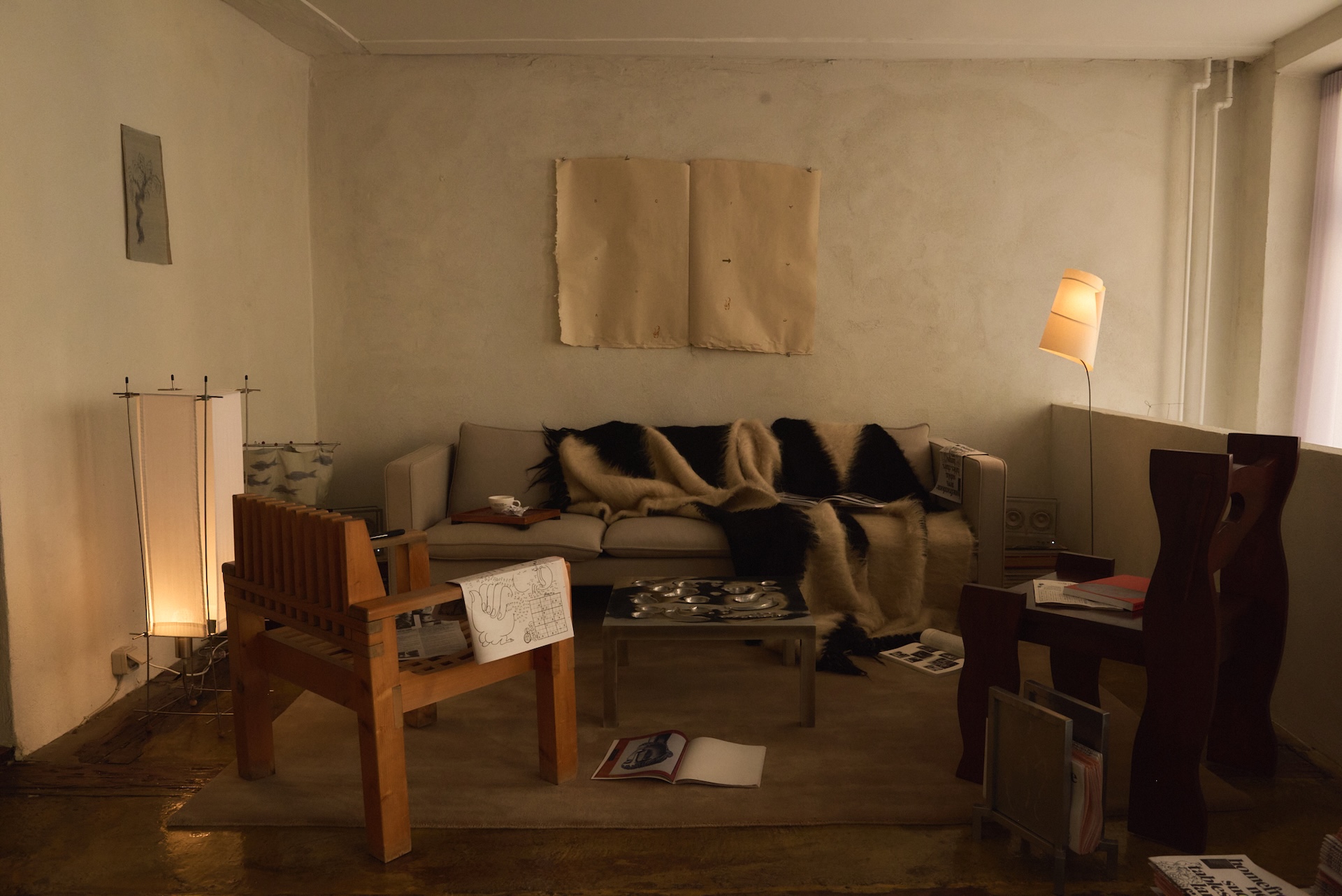
What Makes a House a Home?
There’s a certain beauty in a new beginning. That feeling of starting afresh. The allure of empty rooms that you’ll soon be filling with laughter, love, and only things that add to your bliss. Amidst all the planning and the packing, two key questions inevitably arise: What should you bring? And what should you leave behind?
Aside from personal belongings, mementos — and the people you care about most, it’s really a question of keeping what matters to you, and discarding what doesn’t.
Moving is a process of editing. Choosing objects that resonate with us, ground us, comfort us, and elevate our everyday. Pieces that don’t just occupy a space, but shape how it feels to live there.
Often the choice involves objects that connect us to our past, anchor us in the present, and act as emotional essentials for wherever we find ourselves in the future. Ultimately, so the space we call home reflects the essence of who we are. A place where we can truly be ourselves.
We interviewed three members from our global design community to hear their angle on what, in terms of design, they simply can’t live without.
Max Fraser has been immersed in design and architecture for decades. As Editorial Director of Dezeen, and the author of several influential books about design, one can imagine that he would be hard–pressed to find the one most cherished item to keep in his life. His personal take on the subject encompasses a broader perspective, where ambience, tonality and tactility drive the curation of his home:
“I used to have quite a lot of objects that I'd accumulated in my life. Nowadays, I am much more selective about the things I bring into my home, and will give things away if they no longer bring a purpose. Humans are tactile creatures. I'm invariably attracted to warm natural materials to physically and visually soften a space. Quite often this will be interjected with pops of colour in the accessories and artwork. For smaller objects or those that are less essential, I'm often drawn towards items that are more expressive or graphic in form, and that bring a sense of wonderment into a space.”

Lina Kanafani has made a name for herself as a soothsayer of sorts. Drawing on her keen eye for emerging talent and trends on the horizon, her Mint Gallery in London is an intriguing mix of cutting–edge designs and select works by internationally–recognised talent, with inventive one–off pieces made exclusively for Mint. Her answer to the one object she always brings to a new home was immediate:
“My white Clay chair designed by Maarten Baas in 2007. I was captivated the moment it arrived at Mint and I’ve had it ever since. I am especially attached to it because it’s a playful design which invariably makes me smile, and a landmark of the time when promoting emerging designers was a novelty. It reminds me of my constant excitement, and of a creative period with waves of ideas. Despite its whimsical appearance, the structure is steel, very sturdy and surprisingly comfortable. It almost feels like a hand–drawn chair from fairy tales or children’s books. Like ballerinas on tiptoe, full of humour, yet grounded in a solid design that took years for the public to fully appreciate, whereas for me the connection was instant.”
Anupama Kundoo is an Indian–born Architect, Lecturer, Author and Professor of Architecture and Design Methods at TU Berlin. Her approach could be described as authentic architecture for people, by people, with the potential to create health, happiness, and well–being. Despite wanting more space for enjoying space itself, the one object she would always bring to a new home is tied to her lineage, the memory it retains, and the respect it commands by its sheer existence.:
“Ghungroos are anklets made of small metal bells strung together on a cotton rope that symbolise the essence of Odissi, an ancient Indian classical dance. They enhance the rhythm of dancers to sync with the drumbeats and singers they accompany. Without these, I would miss the essence of harmony and beauty, an embodied experience, including the perception of sounds and the silences between them. Particularly in a fast–paced contemporary lifestyle. They remind me that it is up to us to align with the context and evolve in harmony. They are a tangible link to my Indian roots, my roots in music and dance, and a reminder to keep moving in rhythm.”

At 3daysofdesign, our commitment extends beyond showcasing the latest trends in interior design and furniture. We strive to facilitate meaningful discussions, debate, and actively contribute to pushing forward a more sustainable approach within the realm of interior design and furniture business. Join us in our mission to inspire positive change and promote a greener, more responsible future for the industry.


.00_00_04_23.Still001%20copy.jpg)