Design for Healing at Home
An exploration into how objects contribute to emotional recovery and help make a home a safe haven.
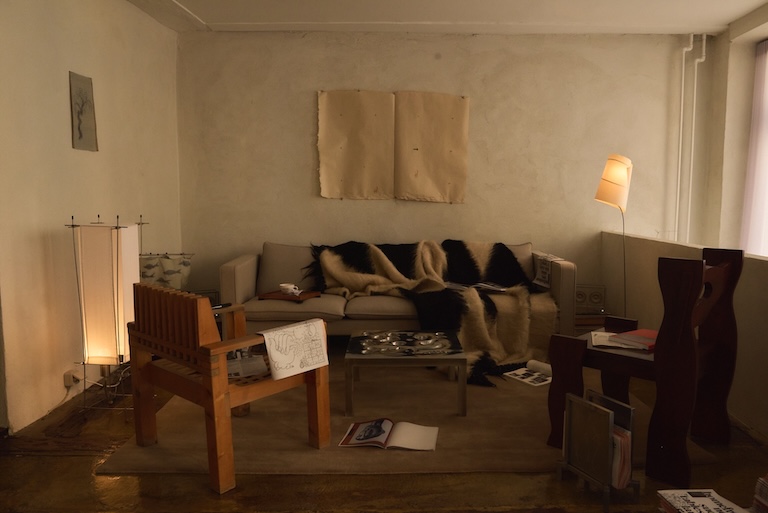
How can design help you heal at home — when home no longer feels like a safe place? For architect and designer Anna Liubimova, that question lies at the heart of her brand SESTRÁ and her new collection debut at this year's 3daysofdesign. A project that examines the home as a place where emotional life unfolds in all its messiness — where we break down, rebuild routines, seek comfort and, hopefully, begin to heal.
With the launch of her new collection, Liubimova asks how design can help restore a sense of safety, agency and belonging. The collection is an evolution of Liubimova’s master’s thesis on domestic space in the context of domestic violence and how trauma affects how we relate to home, safety and everyday objects. When home is no longer a place of comfort, it can become a source of fear triggering hypervigilance and loss of control. Christine Bjerke, an architect and PhD fellow at the Royal Danish Academy, points to a crucial difference between having a place to stay and having a home:
“A home holds the notions of safety, privacy and a sense of agency of our surroundings. When that is broken, the question becomes what it takes to rebuild a home.”
In Liubimova’s search for answers, she uses objects to explore what care might look like in everyday life. Trained as an architect, she combines her experience with architecture, spatial design and curatorial practice to create a body of work at the intersection of socially-driven design, responsible prodcution and art.
Healing is never neat and tidy
Her approach is a response to the need for something different from the polished wellness culture that often inspires contemporary interiors. Spaces are increasingly styled around calmness and control, but that language can feel detached from real, lived experience. Liubimova found that healing is rarely pretty or polished. In its earliest stages, it can look like exhaustion, grief or emotional overload:
“Nothing starts on a yoga mat. The real turning point happens at home, in unguarded moments when a person is at their lowest and begins to look for a way back.”
This insight is the driving force behind her overall focus: how domestic objects can support emotional processing, a sense of belonging and survival? With the collection she asks how the home can shift from being a passive backdrop to an active agent in shaping recovery and care.
Domestic altars for everyday life
Liubimova's collection is built around the idea of the domestic altar — not in a religious sense, but as a personal, intentional space. Across cultures, people create small areas for reflection, memory or grounding. Liubimova reinterprets these gestures for a contemporary home.
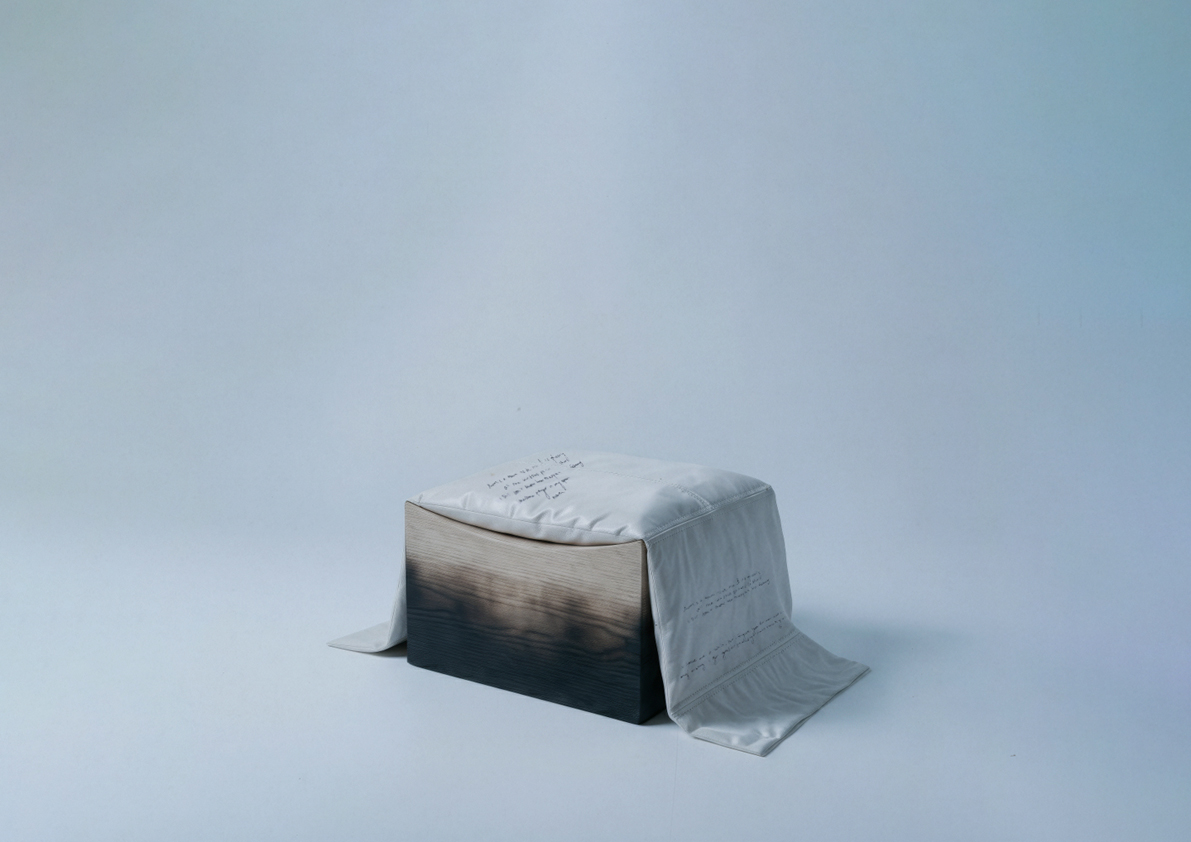
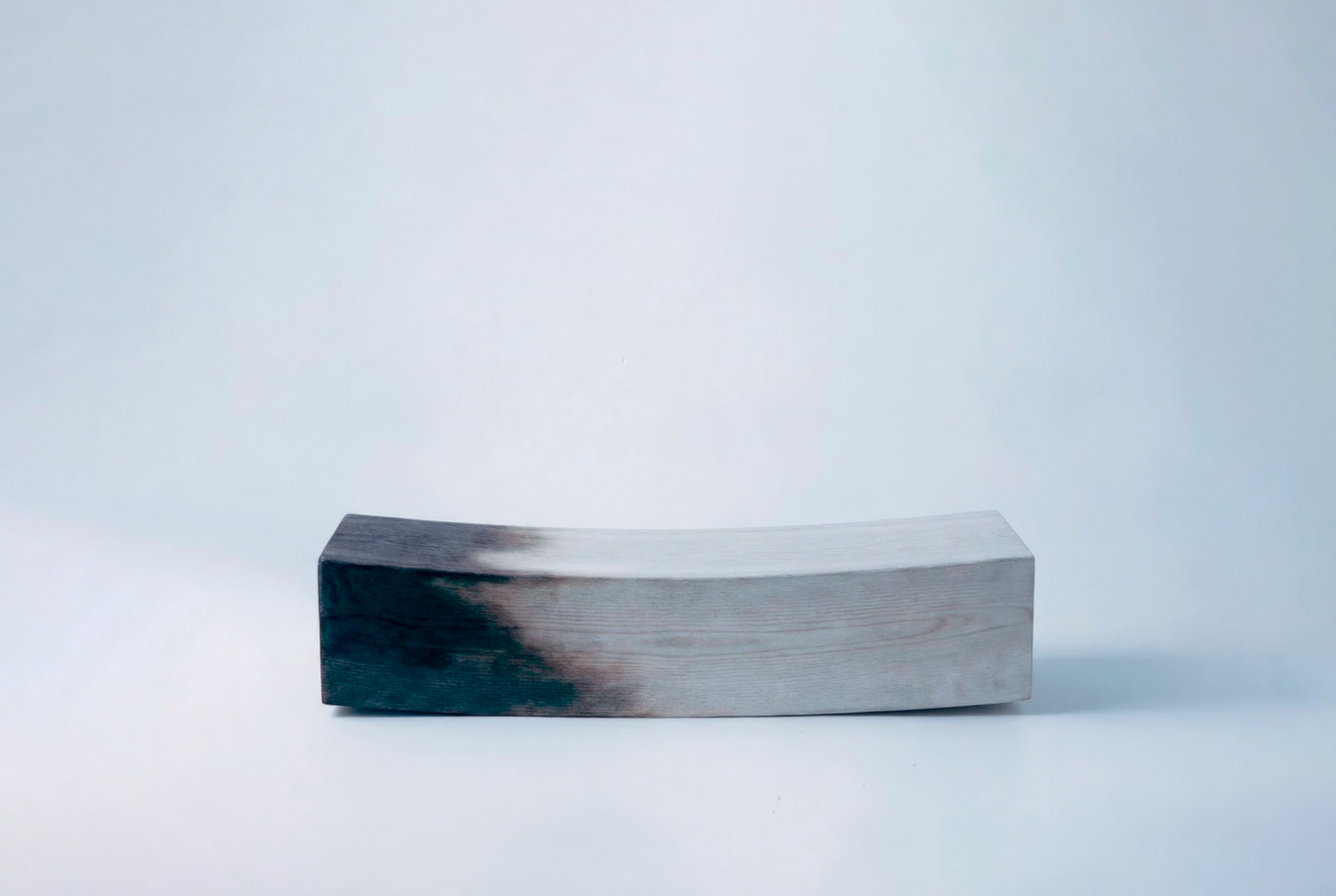
The objects are both functional and symbolic. A glass container for personal belongings combines visibility and privacy through layers of transparency and distortion. A contemplation stool pairs a sculptural ash wood base with a text–inscribed cushion, exploring what is shared and what remains hidden. A balancing table introduces slight instability, prompting bodily awareness, while a wooden plinth dilineates space as intentional and distinct. Together, the pieces suggest that objects are never neutral. They influence our behaviour, perceptions and emotions. Bjerke also points to the broader impact of surroundings:
“Our surroundings affect whether we feel that we are included and whether we can express ourselves in a space. We may have access to a space, but still not have the opportunity to be ourselves in it.”
That's why lived experiences are central to Liubimova’s process, shaped through dialogue with crisis centre managers and survivors. The project’s phenomenological foundation views objects not as static forms, but as factors that impact how we experience space and ourselves.
Rebuilding safety at home
One of Liubimova’s key insights is that recovery often begins with small acts, such as rebuilding routines as a first step towards stability. Here, creating a safe haven at home can involve defining a manageable area or giving meaningful belongings a place in a home. SESTRÁ responds with objects that support grounding presence over performance. They don't promise transformation or solve trauma. Instead, they help frame attention and ownership. They don't hide emotional complexity, they make space for it. Demonstrating that design can do more than decorate. It can tackle difficult issues, challenge how we define comfort and suggest that care is embedded in the spaces and objects we live with.
An open conversation
This June during 3daysofdesign, Liubimova will present her collection of objects alongside prototypes and process work. The installation is intended not as a finished statement, but as an invitation to dialogue about the rituals and objects that shape our experiences of home. It is an openness central to her work. Rather than perscribe one way to heal, Liubimova makes emotional realities visible and acknowledges that home can be both a sanctuary and a struggle. In that tension, she positions design as a quiet framework for care.
At 3daysofdesign, our commitment extends beyond showcasing the latest trends in interior design and furniture. We strive to facilitate meaningful discussions, debate, and actively contribute to pushing forward a more sustainable approach within the realm of interior design and furniture business. Join us in our mission to inspire positive change and promote a greener, more responsible future for the industry.


.00_00_04_23.Still001%20copy.jpg)