The Weight of Joy
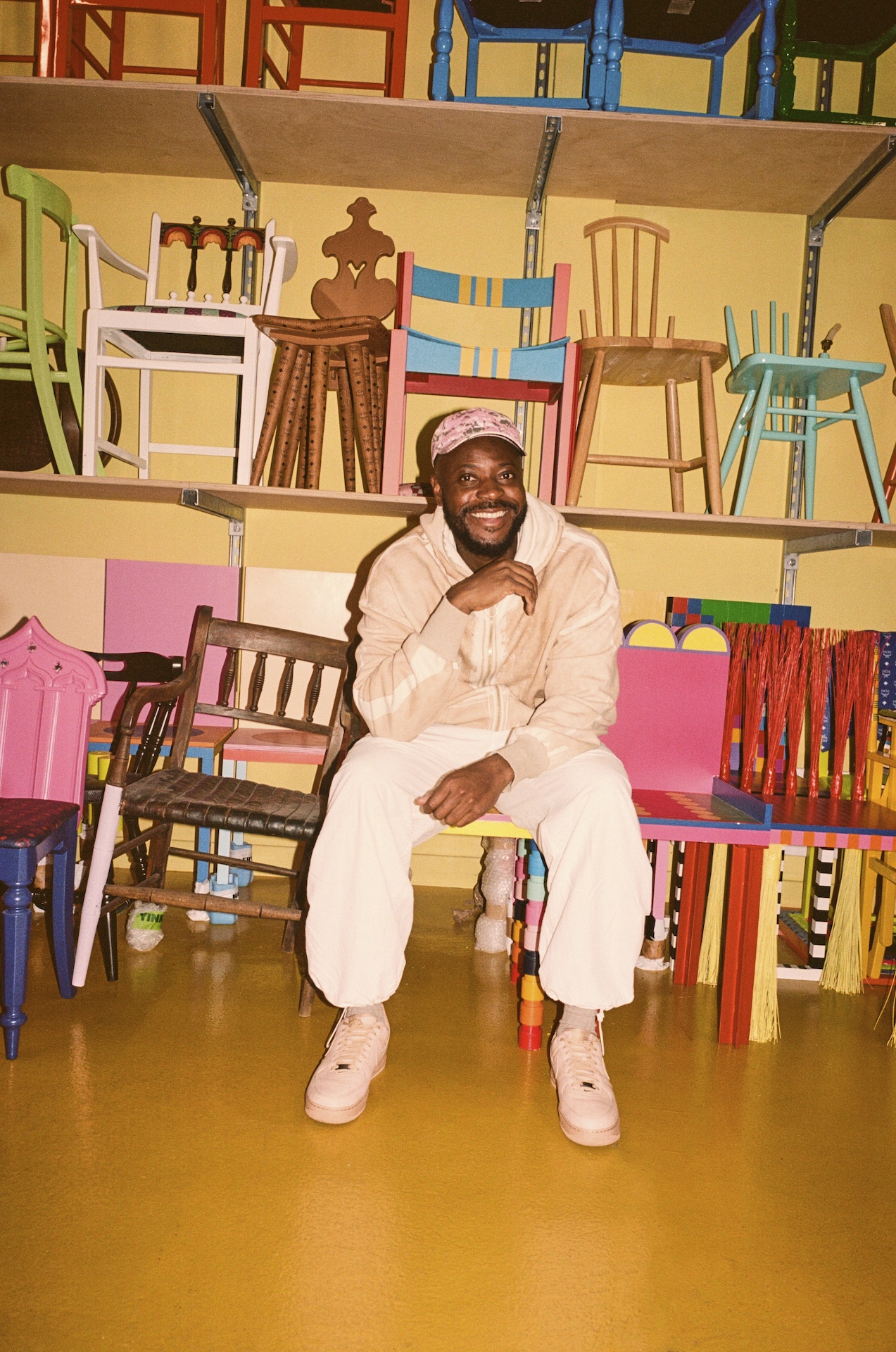
Yinka Ilori uses colour as both invitation and language – drawing people in before revealing the deeper stories held within his work.
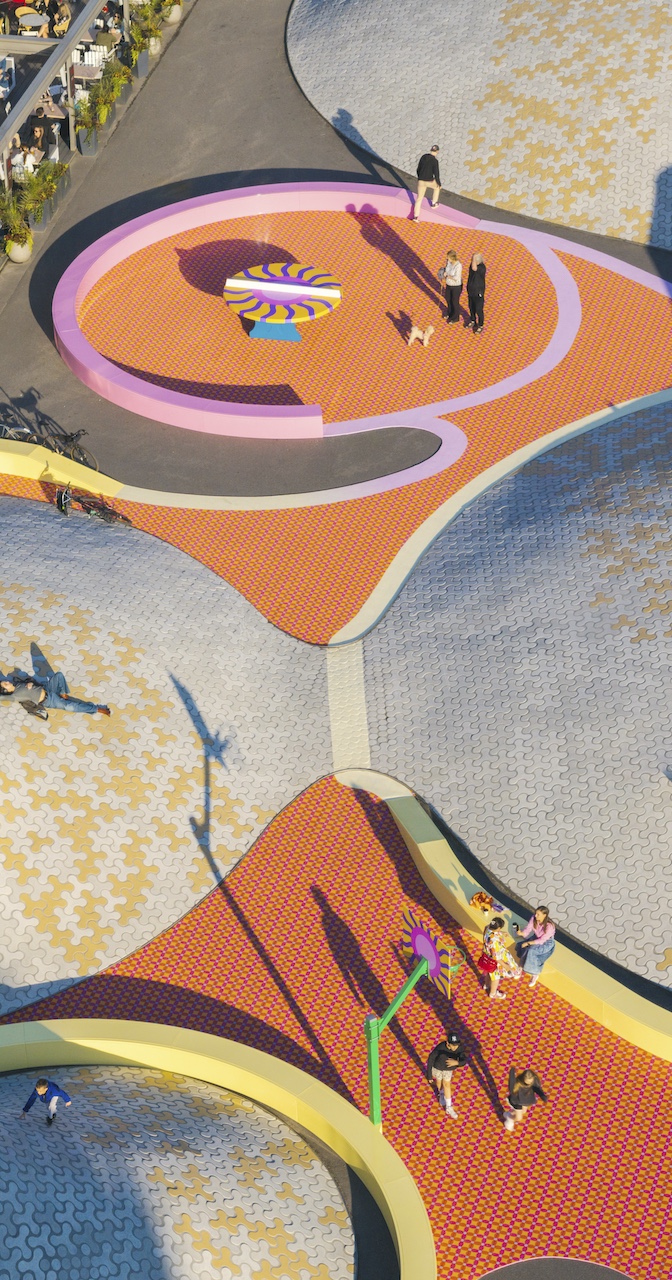
Yinka Ilori's work is often described as joyful, but the word only captures part of what's at play. Colour is the entry point – bold, immediate, disarming – but it is also a method: a way of holding attention long enough for something more complex to surface. Across furniture, public installations and architecture, the British-Nigerian designer draws on personal history and cultural memory, translating them into forms that are as direct as they are layered. His installation during 3daysofdesign extends that approach into an immersive setting, where colour becomes less a visual device than a spatial condition; something that shifts perception, invites connection, and allows individual experience to unfold within a shared environment.
Your work is often described as joyful, but it also carries deeper cultural narratives. How do you balance the two?
For me, joy isn't separate from the deeper stories – it's the way I open the door to them. Colour and play draw people in first; they disarm you a little, and then you start to notice the layers underneath – heritage, memory, community, sometimes even tension. The balance isn't something I calculate. It happens when I trust that joy can carry weight, too.
What does colour allow you to express that form alone cannot?
Colour speaks in a way that feels immediate. It communicates mood, energy, emotion – often before you've had time to think about it. Form can be more structured, more contained, but colour opens it up. It can shift how you read a space instantly, and it allows me to tell stories in a more instinctive, emotional language.
You move across disciplines: art, design, public space. Do you see these as distinct, or part of the same language?
I see them as part of the same conversation. Whether it's an installation in a public space, a sculpture or a building, the intention stays consistent – to connect people and to shift how they feel in a space. The medium changes, but the story doesn't. It's about creating moments where something familiar can be experienced in a new way.

What does it mean to create work that is both personal and public?
It starts from something personal – my memories, my family, my culture – but once the work is out in the world, it no longer belongs only to me. People bring their own interpretations, their own experiences. That shift is important. It's where the work begins to live beyond itself, where it can create connection. My upcoming solo exhibition at Cristea Roberts Gallery, Joy Through Resistance: He Who Laughs Last, Laughs Best, explores that further – looking at cycles of life, loss and resilience. It's very personal, but the hope is that it opens something up for others, too.
What are you hoping people take with them — emotionally or mentally — after experiencing your work?
It changes depending on the project, but I hope there's always some kind of shift. Sometimes it's lightness – feeling more open or uplifted. Other times it's more reflective, like reconnecting with a memory or noticing something you hadn't before. What matters most is that people leave seeing or feeling something differently. It doesn't have to be dramatic. Even a small change in perception can stay with you.
At 3daysofdesign, our commitment extends beyond showcasing the latest trends in interior design and furniture. We strive to facilitate meaningful discussions, debate, and actively contribute to pushing forward a more sustainable approach within the realm of interior design and furniture business. Join us in our mission to inspire positive change and promote a greener, more responsible future for the industry.
.00_00_04_23.Still001%20copy.jpg)